
Seesnote #103 – Decision and Problem Solving | Communication
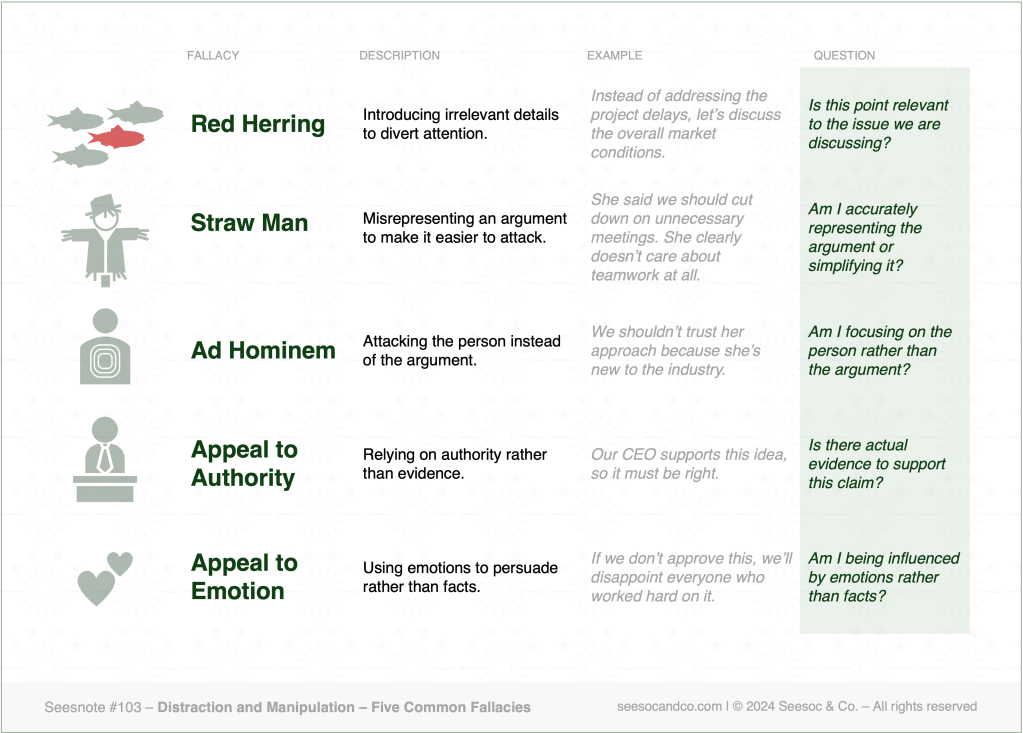
Why is it important?
In discussions, collaboration, or debates, people may—intentionally or unintentionally—use distraction or manipulation to defend their beliefs or gain an advantage.
These tactics can derail productive conversations, leading to decisions based on irrelevant or misleading information.
Identifying these fallacies is essential for maintaining focus and supporting rational, well-informed decision making.
What to do
Stay focused on the core issue, avoiding distractions from irrelevant or emotionally charged points.
Focus on the argument itself, not the individual or authority figures presenting it. While reputable experts should not be dismissed outright, apply critical thinking and gauge your audience’s openness before challenging authority.
Be mindful of your discussion partner’s feelings, the influence they may hold, and any power dynamics at play, adopting the most strategic and effective stance.

References
- Walton, D. (1979). Ignoratio elenchi: The red herring fallacy. Informal Logic, 2(3).
- Tindale, C. W. (2007). Fallacies and argument appraisal. Cambridge University Press.
- Walton, D. (1998). Ad hominem arguments. University of Alabama Press.
- Walton, D. (2010). Appeal to expert opinion: Arguments from authority. Penn State Press.
- Macagno, F., & Walton, D. (2014). Emotive language in argumentation. Cambridge University Press.
 Seesoc & Co.