
Seesnote #102 – Decision and Problem Solving
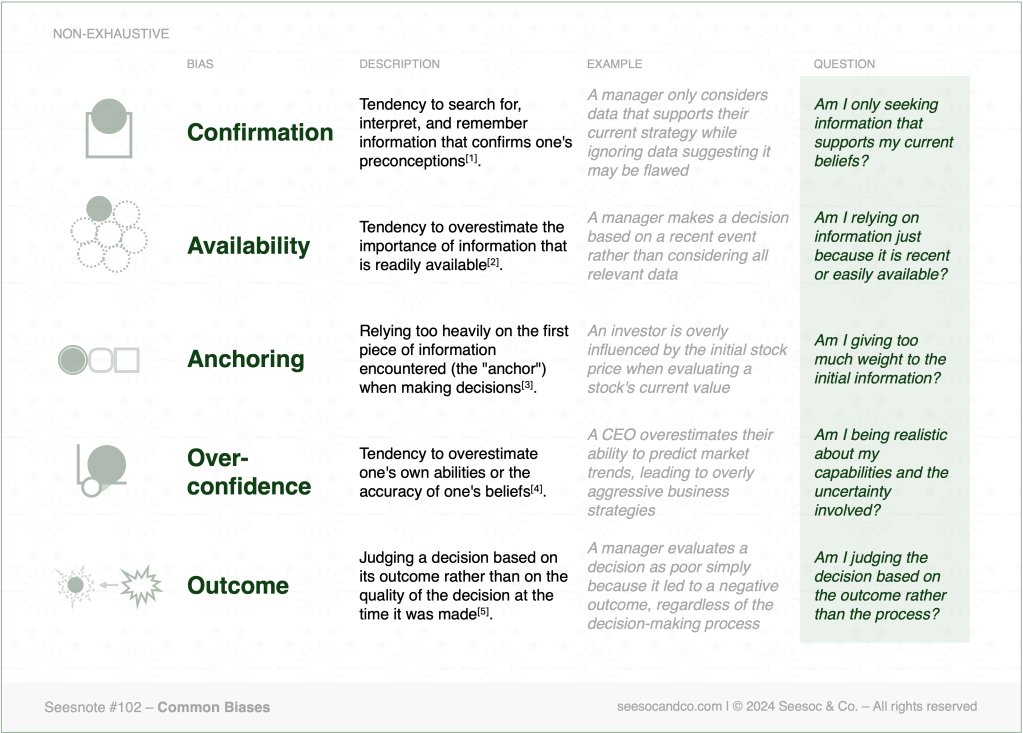
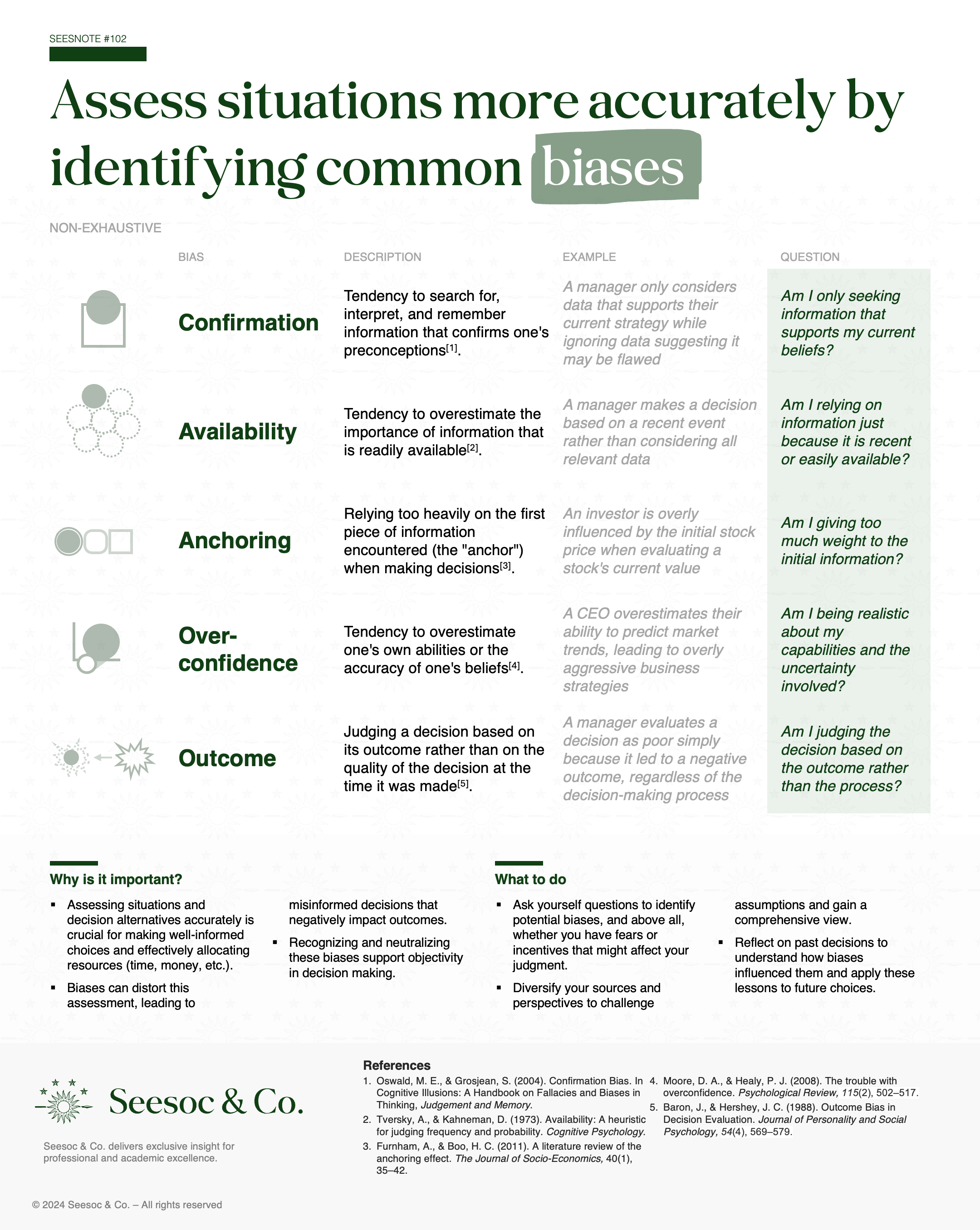
Why is it important?
Assessing situations and decision alternatives accurately is crucial for making well-informed choices and effectively allocating resources (time, money, etc.).
Biases can distort this assessment, leading to misinformed decisions that negatively impact outcomes.
Recognizing and neutralizing these biases support objectivity in decision making.
What to do
Ask yourself questions to identify potential biases, and above all, whether you have fears or incentives that might affect your judgment.
Diversify your sources and perspectives to challenge assumptions and gain a comprehensive view.
Reflect on past decisions to understand how biases influenced them and apply these lessons to future choices.
Download the seesnote
References
- Oswald, M. E., & Grosjean, S. (2004). Confirmation Bias. In Cognitive Illusions: A Handbook on Fallacies and Biases in Thinking, Judgement and Memory.
- Tversky, A., & Kahneman, D. (1973). Availability: A heuristic for judging frequency and probability. Cognitive Psychology.
- Furnham, A., & Boo, H. C. (2011). A literature review of the anchoring effect. The Journal of Socio-Economics, 40(1), 35–42.
- Moore, D. A., & Healy, P. J. (2008). The trouble with overconfidence. Psychological Review, 115(2), 502–517.
- Baron, J., & Hershey, J. C. (1988). Outcome Bias in Decision Evaluation. Journal of Personality and Social Psychology, 54(4), 569–579.
 Seesoc & Co.