
Seesnote #200 – Business Development
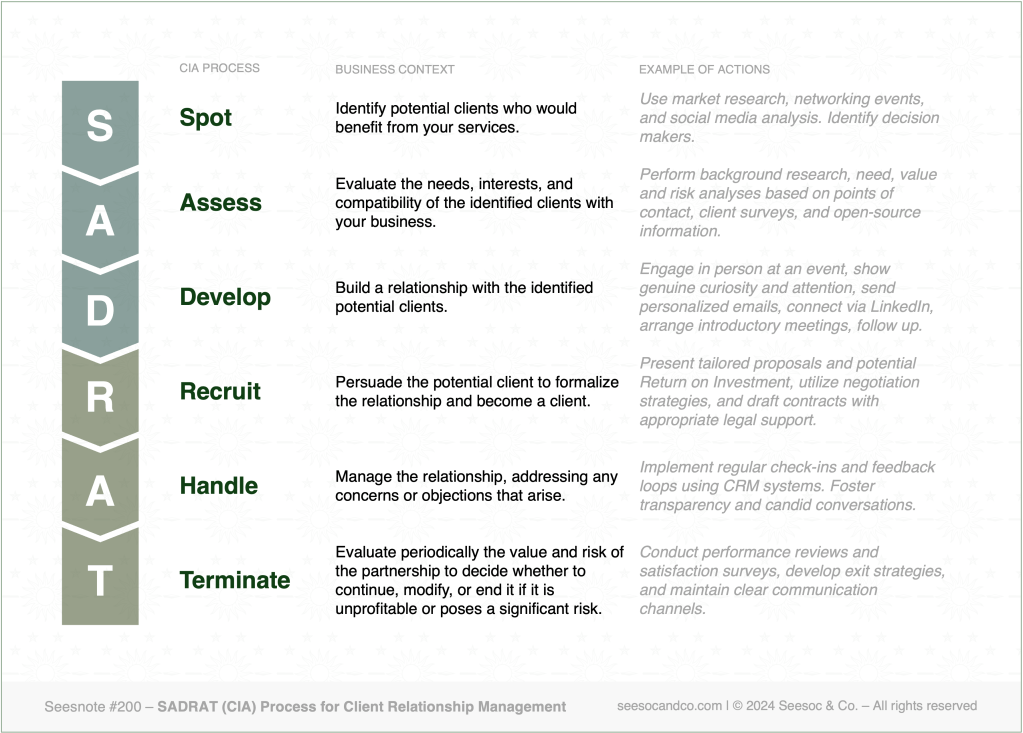
Why is it important?
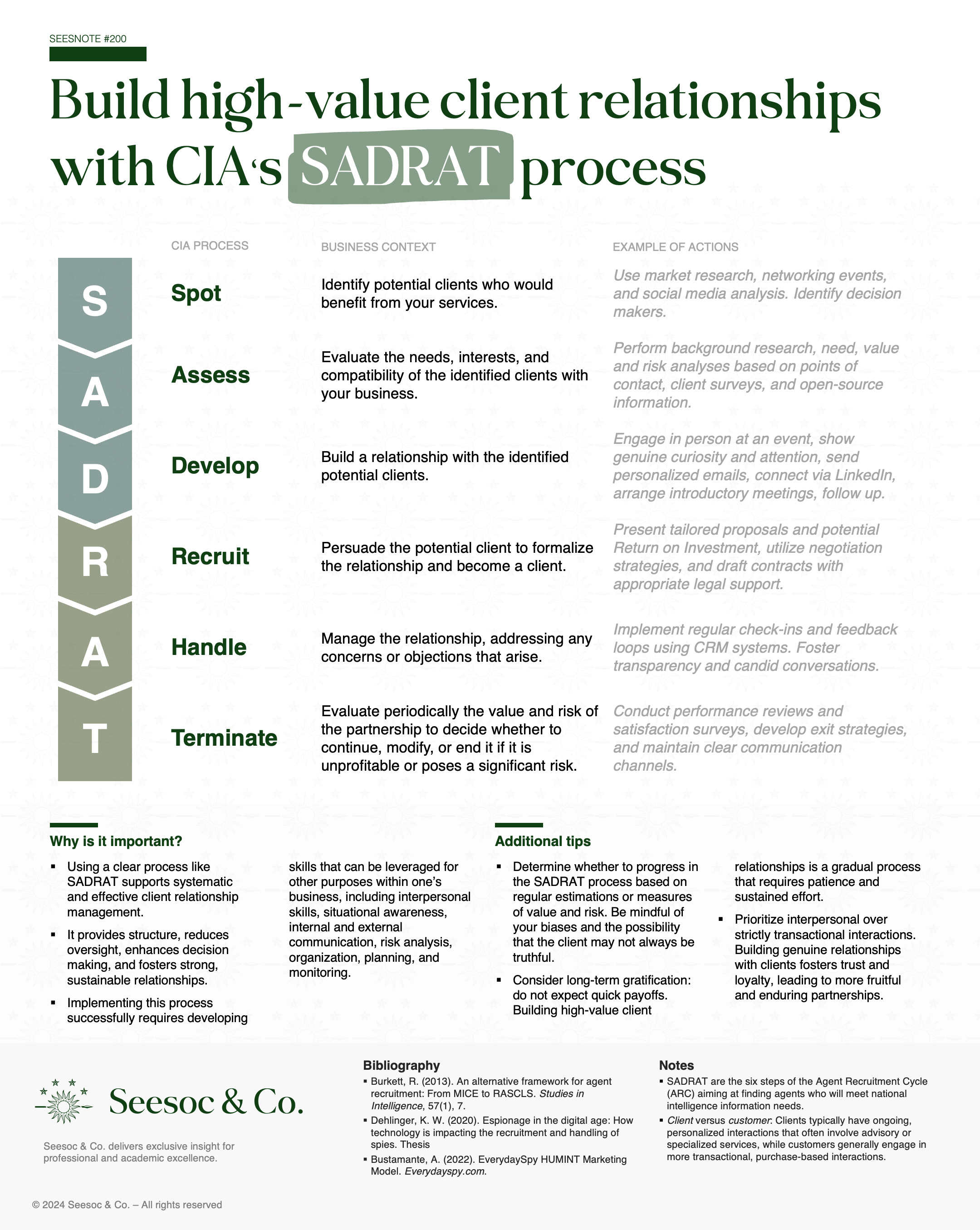
Using a clear process like SADRAT supports systematic and effective client relationship management.
It provides structure, reduces oversight, enhances decision making, and fosters strong, sustainable relationships.
Implementing this process successfully requires developing skills that can be leveraged for other purposes within one’s business, including interpersonal skills, situational awareness, internal and external communication, risk analysis, organization, planning, and monitoring.
Additional tips
Determine whether to progress in the SADRAT process based on regular estimations or measures of value and risk. Be mindful of your biases and the possibility that the client may not always be truthful.
Consider long-term gratification: do not expect quick payoffs. Building high-value client relationships is a gradual process that requires patience and sustained effort.
Prioritize interpersonal over strictly transactional interactions. Building genuine relationships with clients fosters trust and loyalty, leading to more fruitful and enduring partnerships.
Listen to the podcast
Download the seesnote
Notes
- SADRAT are the six steps of the Agent Recruitment Cycle (ARC) aiming at finding agents who will meet national intelligence information needs.
- Client versus customer: Clients typically have ongoing, personalized interactions that often involve advisory or specialized services, while customers generally engage in more transactional, purchase-based interactions.
Bibliography
- Burkett, R. (2013). An alternative framework for agent recruitment: From MICE to RASCLS. Studies in Intelligence, 57(1), 7.
- Dehlinger, K. W. (2020). Espionage in the digital age: How technology is impacting the recruitment and handling of spies. Thesis
- Bustamante, A. (2022). EverydaySpy HUMINT Marketing Model. Everydayspy.com.
 Seesoc & Co.